
Category: Blog
Category: Blog
Topics:
Topics:
What Are Healthcare Data Services, and Do You Need Them?
Every health system and health plan leader has felt the same tension. The organization has real ambitions for value-based care performance and analytics-based AI readiness. But, the data feeding those initiatives is inconsistent, incomplete, or arrives too late to trust. This is where healthcare data services enter the conversation, but the term covers a wide range of capabilities, and not every organization needs the same combination. Understanding the landscape and where internal capacity ends and outside expertise should begin is the first step toward an analytics foundation you can actually rely on.
The broader healthcare data landscape
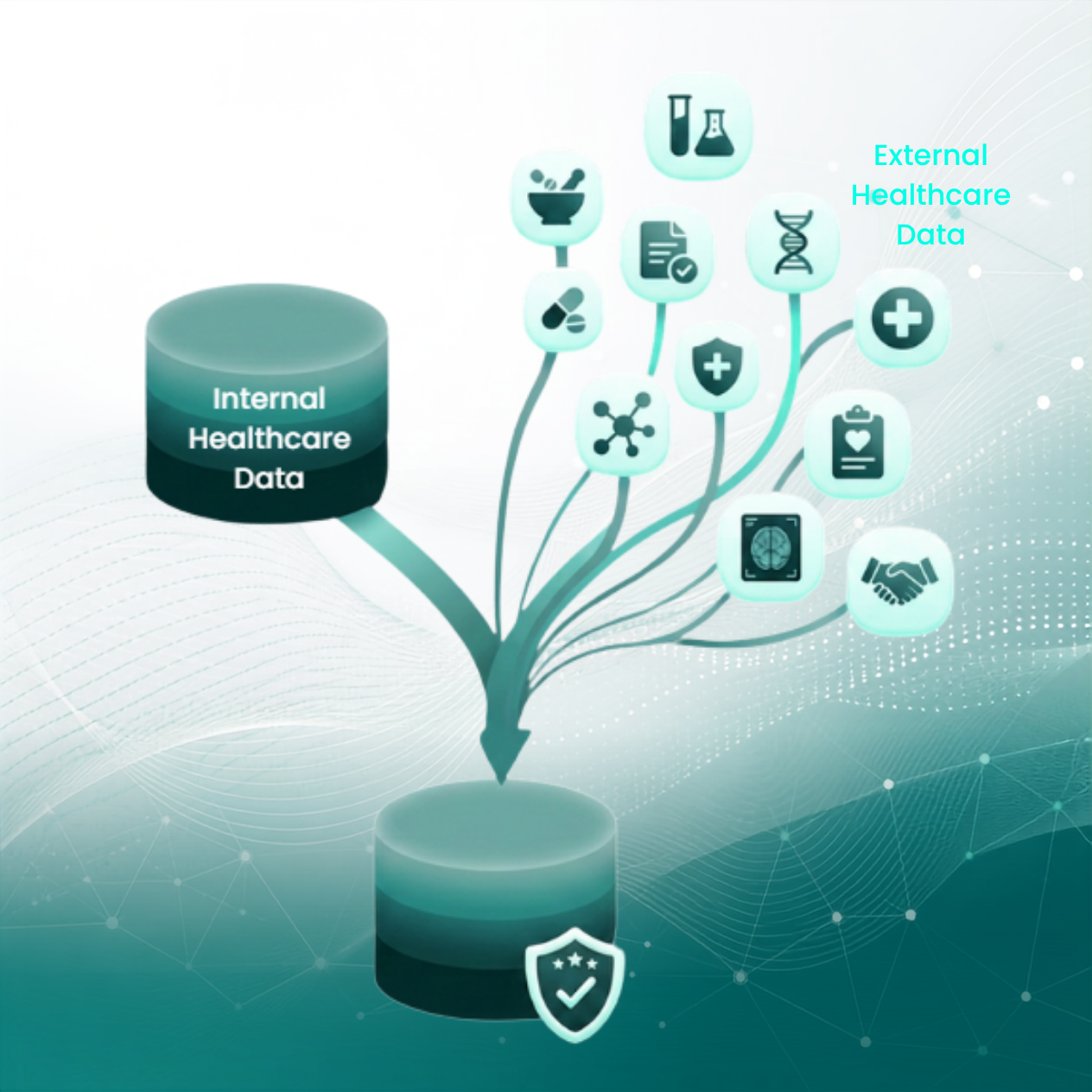
Healthcare data services cover a broad range of work, but it helps to start with a simple framework. Most health systems rely on two major categories of healthcare data, internal and external. Both categories must be trusted to support the organization’s analytics, business intelligence, and visualization layer.
Internal healthcare data is generated within the health system’s own systems, such as the EHR, clinical documentation, operational systems, and internal quality reporting. Managing this data typically centers on governance, quality, consistency, access, and appropriate use so teams can rely on it for reporting, decision-making , and patient care.
External healthcare data comes from outside the organization, including payers, PBMs, labs, vendors, and other partners. It is often essential for value-based care, population health, financial performance, and advanced analytics, but it arrives in formats, schedules, and levels of completeness the organization does not fully control.
Both internal and external healthcare data must be trusted before they can support analytics, BI, dashboards, visualization tools, predictive models, or AI initiatives. Most organizations understand the importance of governing their internal data, but they often underestimate the effort required to make external healthcare data equally trustworthy. Acquiring, cleansing, standardizing, validating, resolving, and delivering external data are the focus of the rest of this article.
What falls under external healthcare data services
Within external data management, healthcare data services generally span five categories, each addressing a different point in the data lifecycle.
1. Data acquisition
Sourcing claims, eligibility, pharmacy, lab, and other external healthcare data from payers, PBMs, labs, and other vendors. Then, systematically tracking every expected file to surface gaps that can go unnoticed. This sounds straightforward until you consider that each has its own file format, delivery schedule, and quirks that vary by payer. HDI’s internal analysis shows that health systems with a population health or value-based care program have an average of 7 vendor relationships and 28 active layouts at any given time. However, some health systems are managing as many as 14 vendors and more than 75 active layouts.
2. Data validation
Identifies common problems in incoming files, such as missing fields, invalid codes, duplicate records, or values outside expected ranges. Some technical issues can be corrected during processing. Other issues require investigation and remediation with the payer or vendor.
3. Data resolution
When validation reveals a problem, analysts must investigate its source. This requires a deep understanding of claims data, including context, meaning, file structure, coding conventions, and payer-specific requirements. The analyst must determine whether the issue originated with the source file, a layout change, a mapping rule, or another part of the data flow. They must then document the issue clearly and communicate the required corrective action for the payer so they can provide an updated file. If these issues are not resolved early, they can move downstream and distort cost, utilization, and quality metrics before anyone notices.
4. Data standardization and normalization
Claims data is mapped into a consistent model where it is standardized and normalized. It ensures that a diagnosis code or a member identifier means the same thing regardless of which payer or vendor it came from. Without this step, cross-source comparisons and trend reporting become unreliable.
5. Data integration and aggregation
Cleaned, standardized, validated data is extracted into the format required by each target environment to help ensure that a health system’s data can flow into the data warehouse, analytics platform, and clinical system your teams use, in the format and cadence those systems require.
When to bring in an external partner
Internal data teams are often strong in managing internal data for analytics and reporting. External healthcare data is a different discipline. Teams must monitor ongoing changes, catch anomalies before they reach dashboards, and maintain validation logic across complex business rules. Three signs suggest it may be time to look outside for support.
- Your team spends more time resolving data quality issues than analyzing results. If analysts are spending time trying to reconcile results rather than generating insights, the data management burden has likely outgrown internal capacity.
- Value-based care contracts depend on data your organization does not fully trust. Confident performance reporting, risk adjustment, and quality measurement all break down if the underlying claims and eligibility data have undetected gaps or inconsistencies.
- AI and advanced analytics initiatives are stalling due to data readiness issues. Every AI model is only as reliable as the data it learns from. Inconsistent external data undermines that reliability before the model ever runs.
Healthcare data services start with trusted data
Healthcare data services span internal data governance, analytics, and the ongoing management of external healthcare data. Most organizations need a mix of all three. The external side, however, is often the most underestimated. It requires ongoing work to acquire, cleanse, standardize, and deliver data as vendors, formats, and requirements change. The real question is not whether to invest in strong data management, but whether that management happens inside an already stretched internal team or through a partner built exclusively for this work.
For health systems that depend on external data for value-based care, analytics, AI, financial performance, and operations, HDI provides continuous External Data Management through purpose-built technology, proven processes, and hands-on healthcare data experts. We track every expected file, standardize and validate the data, investigate and resolve issues, and deliver one trusted source to every downstream system. Your teams can focus on using the data instead of chasing it—and make confident decisions with external healthcare data that is one less thing to worry about.
Trusted Healthcare Data Enables Confident Decisions.